Understand photography and learn to create meaningful, expressive, and unique photographs anytime, anywhere.
————-
Special Announcement
There’s only two spots left in the Photography Basics/Introduction To Photography class starting this Sunday, March, 29.
Special Announcement
————-
Friday, March 27, 2026.
When we understand what a lens does, we have a better idea of
how to use it to create the photographs we want.
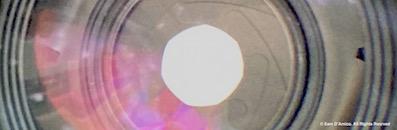
I think of a lens as doing four things.
1. Focus
One of the things it does is help us focus, and what focusing specifically does is make something at a specific distance the sharpest thing in our photograph.
2. Angle of View
Another thing a lens does is it gives us an angle of view.
We define a lens’s angle of view by its focal length, and describe it in millimeters.
For example, 35 mm lens, 50 mm
lens, 80 mm lens, 100 mm lens, etc.
In general, we described focal length categories as wide-angle, normal, and telephoto.
Focal lengths have everything to do with what we include and exclude in our pictures.
A 50 mm lens is considered normal.
Any number above 50mm is heading toward telephoto; any number below 50 is heading toward wide-angle.
Wider-angle-of-view focal lengths expand (widen) what we see in our photographs, appear to
expand distance from foreground to background, and can provide context.
More narrow-angle-of-view (telephoto) focal lengths narrow our view, magnify, appear to compress the distance between the foreground and background, and can isolate
things.
3. Exposure
We control exposure by adjusting the size of the aperture, allowing more or less light to reach the digital sensor or film, effectively making the picture brighter or darker.
4. Depth of Field (DOF)
Depth of field deals with apparent sharpness in front of and in back of the distance we focus on.
The size of the aperture
opening influences how sharpness appears in front of and in back of the distance we focus on.
A deeper depth of field makes it appear as if things in the background and foreground are sharper.
A shallower depth of field makes it appear as if things are less sharp in the foreground and background.
Our lens is a big part of our
compositional decisions and creativie expression.
When we begin to understand how to use our lenses effectively, we’ve added another tool to our creative and compositional toolboxes.
Additionally, we’re no longer just seeing
and photographing what’s there—we’re deciding to express how we think about what we’re seeing and experiencing.
That’s how we deepen our creativity and compositions, while expanding our visual vocabulary and expressing our unique visual
voice.
In this way, creativity becomes free-flowing and repeatable.
Lenses are one of the ways we
influence our compositions before even pressing the shutter release to make an exposure.
That’s how our photographs become our one-of-a-kind, intentional photographic expressions.
Ready to
learn about lenses and use them creatively?
————-
Ways To Study and
Practice Photography With Me
Customized Private Photography Instruction
DC Private Photography Lessons
Online Private Photography Instruction
Prefer a structured class experience?
Learn to Think Like a Photographer
Photography Basics / Intro to
Photography
Intermediate Photography
Getting to Know Your Camera
Master Composition with Your Smartphone
Looking for ongoing learning at your own pace?
Sam’s Online Learning Platform for
Photographers