Sam offers in-person and online photography instruction. Call him at 202-531-2344 to see how he can help
you.
These emails come with the intent of helping you be a better photographer. But if you're tired of hearing from me, unsubscribe. And if you want more photography stuff to read, there's a place on the interwebs where past emails I wrote are stored. You'll find 'em in the "Newsletter Hub." Remember, I'd like to know what you want to know about photography. So, if you have any questions, email me at sam@samdamico.com. And for what it's worth, when you send me an email unless someone's lookin' over my shoulder, I'm the only one who sees it.
First, here's a correction related to yesterday's email. "I saw a couple with more complex cameras like DSLRs or wireless cameras, but the point is there are photographers everywhere." The word
"wireless" shoulda been "mirrorless". And now, let's get to talkin' photography. When someone "gets us," it's like they know us so well that they can read our minds. We usually experience that with
people who are close to us, or we might experience that with something we feel was made just for us, even though it wasn't; it's just that the design of the user interface (ergonomics) of the product feels like the company that made the product or provides the service read our minds when making the product or planning the service. In other words, the system, product, or service knows what we want or need, maybe before we even realize it. It's like mind-reading
magic. We can take experiences like that for granted, especially when they come from another human. But we can begin to rely on it and expect from other things, like our cameras. Especially when working our cameras in
an automatic exposure mode. The problem is that cameras don't have minds, and it takes a mind to read a mind. So when automatic exposure mode doesn't give us the picture we have in mind, what can we do? We've
got two choices. Choice one is we can take whatever picture the camera gives us in automatic exposure modes, or, with choice two, we can resolve to learn to create the images we want by working in manual exposure mode. With choice one, we continue to get undesired outcomes in terms of the pictures we have in mind. Furthermore, continuing to work in a choice-one way leaves us frustrated and disengaged from our photography because we don't understand how camera operation, composition, and light all interrelate to create a picture. Cameras can't read our minds and give us the pictures we visualize, but we can use our minds to operate our cameras in manual exposure mode to get the photographs we imagine. Which brings us to choice two. When we learn to work our camera in manual exposure mode, we understand the cause-and-effect relationships between camera operation, composition, and
light. When we understand that, we have the confidence and know-how to create pictures that match our intended compositional outcome. And while our cameras will never "get us," we can learn to "get" our cameras and "get" photography. Working our camera in manual exposure to create the pictures we want may not be as fun as having our minds read, but it's a lot more effective and reliable when it comes to making the pictures we have in mind.
-------
The Photography Basics (Introduction To Photography) group classes starts soon or you can learn the same stuff as a series of Private Lessons.
More ways to study and practice photography with me are below. Call me if you need help determining the
best course for you. A note about group class sizes: Did you know that some places that teach photography have up to 25 students in each class? Bigger ain't always better. That's why I limit my group classes to no more than five participants because smaller classes make for better, more effective, and more efficient learning experiences. But smaller classes also mean spots fill up quicker,
so sign up soon.
I'll help you be a better photographer—study and practice photography with me. Currently scheduled classes are below. And what if the timing doesn't work for you in any of my scheduled group classes? Private in-person lessons suited to your schedule are always an option. And remember, we learn and improve by doing, so practice making at least one
picture daily.
The other day, I started a series of Private Lessons covering the same
material presented during the Photography Basics (Introduction To Photography) group class. Two photographers are participating in the lessons, and they share a camera. As usual, I start
every class by having the participants make a picture and get their opinion of the picture they made, especially in terms of tonality. Both photographers thought the tonality of the pictures created in automatic exposure mode was too
bright or too dark. I pointed out that the tonality of our picture is a primary compositional consideration, and before we begin to consider other elements of composition, we've gotta take care of the tonality. However, there's no way to control tonality or any other elements of composition beyond framing and content while working in automatic exposure mode. If we wanna be better photographers and make the pictures we want, the first thing we gotta realize is that automatic exposure mode won't allow us to do that. And it won't allow us to do that because, beyond framing and content, automatic exposure mode takes away all of our creative control. Although we might think that
the automatic exposure is "making a mistake" or is malfunctioning, it's not; it's just doing what it does, which is creating a picture based on the distribution of light intensities of the stuff we're putting in the frame and giving us a standard tonality, which often isn't the totality we prefer. In other words, the camera doesn't know what we want. The camera knows nothing; it's an unthinking, unfeeling machine with computer algorithms that only evaluate light
intensities and pumps out a picture based on that criteria. Although that's an important criterion, it takes the human element out of the creation of the picture. It disregards all the other elements of composition that go into making a picture that's uniquely ours. The picture that automatic exposure makes is a mechanical and electronic creation without consciousness. In a way, automatic exposure mode is a photographer's version of AI. But the reality is there's no intelligence there at all, there's also no judgment or discretion, and those are the very things that add our humanity to the picture, creating meaningful, expressive photography. Then, the question becomes, what exposure mode will allow us to add our humanity to the picture, creating meaningful, expressive photography? It's the exposure mode that allows us to control every aspect of our composition. Automatic
exposure mode is a limited function on a complex tool (our camera). On the other hand, manual exposure mode offers us unlimited functions so we can use the full complexity of the tool. When we use an exposure mode that allows us to use the full complexity of the tool, we can add our intelligence, judgment, and discretion, which is our job as humans, if we wanna create intentionally expressive, unique imagery. When we do that, we're responsible for the pictures we make, and we restore humanity to our photography.
-------
The Photography Basics (Introduction To Photography) group classes starts soon or you can learn the same
stuff as a series of Private Lessons.
More ways to study and practice photography with me are below. Call me if you need help determining the best course for you. A note about group class sizes: Did you know that some places that teach photography have up to 25 students
in each class? Bigger ain't always better. That's why I limit my group classes to no more than five participants because smaller classes make for better, more effective, and more efficient learning experiences. But smaller classes also mean spots fill up quicker, so sign up soon.
I'll help you be a better photographer—study and practice photography with me. Currently scheduled classes are below. And what if the timing doesn't work for you in any of my scheduled group classes? Private in-person lessons suited to your schedule are always an option. And remember, we learn and improve by doing, so practice making
at least one picture daily.
The other day, I started a series of Private Lessons covering the same
material presented during the Photography Basics (Introduction To Photography) group class. Two photographers are participating in the lessons, and they share a camera. As usual, I start
every class by having the participants make a picture and get their opinion of the picture they made, especially in terms of tonality. Both photographers thought the tonality of the pictures created in automatic exposure mode was too
bright or too dark. I pointed out that the tonality of our picture is a primary compositional consideration, and before we begin to consider other elements of composition, we've gotta take care of the tonality. However, there's no way to control tonality or any other elements of composition beyond framing and content while working in automatic exposure mode. If we wanna be better photographers and make the pictures we want, the first thing we gotta realize is that automatic exposure mode won't allow us to do that. And it won't allow us to do that because, beyond framing and content, automatic exposure mode takes away all of our creative control. Although we might think that
the automatic exposure is "making a mistake" or is malfunctioning, it's not; it's just doing what it does, which is creating a picture based on the distribution of light intensities of the stuff we're putting in the frame and giving us a standard tonality, which often isn't the totality we prefer. In other words, the camera doesn't know what we want. The camera knows nothing; it's an unthinking, unfeeling machine with computer algorithms that only evaluate light
intensities and pumps out a picture based on that criteria. Although that's an important criterion, it takes the human element out of the creation of the picture. It disregards all the other elements of composition that go into making a picture that's uniquely ours. The picture that automatic exposure makes is a mechanical and electronic creation without consciousness. In a way, automatic exposure mode is a photographer's version of AI. But the reality is there's no intelligence there at all, there's also no judgment or discretion, and those are the very things that add our humanity to the picture, creating meaningful, expressive photography. Then, the question becomes, what exposure mode will allow us to add our humanity to the picture, creating meaningful, expressive photography? It's the exposure mode that allows us to control every aspect of our composition. Automatic
exposure mode is a limited function on a complex tool (our camera). On the other hand, manual exposure mode offers us unlimited functions so we can use the full complexity of the tool. When we use an exposure mode that allows us to use the full complexity of the tool, we can add our intelligence, judgment, and discretion, which is our job as humans, if we wanna create intentionally expressive, unique imagery. When we do that, we're responsible for the pictures we make, and we restore humanity to our photography.
-------
The Photography Basics (Introduction To Photography) group classes starts soon or you can learn the same
stuff as a series of Private Lessons.
More ways to study and practice photography with me are below. Call me if you need help determining the best course for you. A note about group class sizes: Did you know that some places that teach photography have up to 25 students
in each class? Bigger ain't always better. That's why I limit my group classes to no more than five participants because smaller classes make for better, more effective, and more efficient learning experiences. But smaller classes also mean spots fill up quicker, so sign up soon.
I'll help you be a better photographer—study and practice photography with me. Currently scheduled classes are below. And what if the timing doesn't work for you in any of my scheduled group classes? Private in-person lessons suited to your schedule are always an option. And remember, we learn and improve by doing, so practice making
at least one picture daily.
About
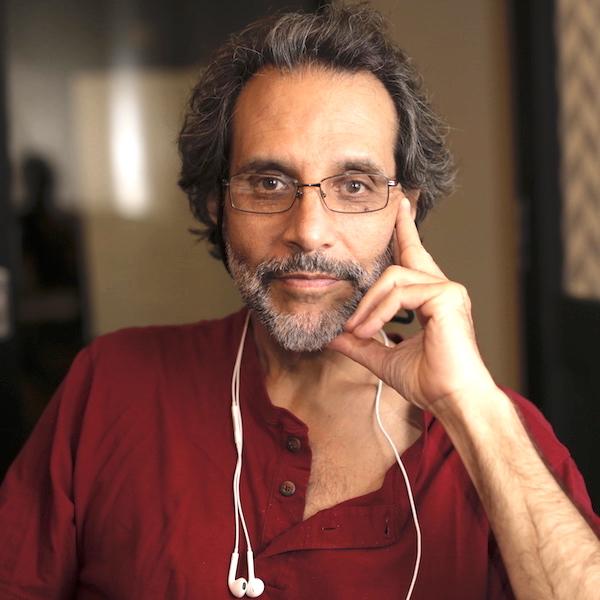
Sam Sam D'Amico, a professional photographer and photography instructor, helps anyone who wants to be a better photographer. He'll work with his students to increase their understanding of camera operation, composition, light, and lighting. Sam started working as a professional photographer in the mid-1980s. Most notably, from 1992 to 1997, while working as a freelance photographer, he photographed over 500 assignments for the New York Times. Additionally, Sam received awards for his work while exhibiting his photographs in shows. Sam began
teaching photography professionally in 1998 through the Highland Park, N.J. recreation department. In 2002 Sam moved to Washington, D.C., and began teaching at the accredited
Washington School of Photography in Bethesda, Md. It was in 2003 that Sam developed his curriculum and started teaching classes in Washington, D.C. In 2018 and 2022, the Sam D'Amico Photography Classes were voted the "Best of DC" art class by the readers of the Washington City Paper. Many photography teachers spend a lot of time teaching about DSLRs and rules of composition that create homogenized, rigid photographs. On the other hand, Sam teaches about camera operation, thought process, and the individual photographer's visual communication intent. This approach to teaching allows his students to use ANY camera (yes, even the camera on their phone) and break free of the rules of composition. Approaching the creative process this way allows for fluid and spontaneous photographs unique to the photographer creating them. Sam encourages his students to find their ways as photographers. He instills the skills in his
students that result in creative, engaging, and unique compositions that reflect the photographer's intended one-of-a-kind visual expression.
|
|
|