Sam offers in-person and online photography instruction. Call him at 202-531-2344 to see how he can help
you.
These emails come with the intent of helping you be a better photographer. But if you're tired of hearing from me, unsubscribe. And if you want more photography stuff to read, there's a place on the interwebs where past emails I wrote are stored. You'll find 'em in the "Newsletter Hub." Remember, I'd like to know what you want to know about photography. So, if you have any questions, email me at sam@samdamico.com. And for what it's worth, when you send me an email unless someone's lookin' over my shoulder, I'm the only one who sees it.
I wanna expand on what I said yesterday because yesterday‘s email to you wasn’t enough. I’ve been a photographer for a while and I’ve been teaching photography for a while. I know and
understand what we go through because I’ve gone through it.
The truth is we never done.
And that’s a good thing.
There’s always gotta be something that keeps us going.
As photographers, we evolve.
We mold our photographic evolutions through experience, the equipment we use, our vision, and, of course, time.
Generally, our evolution happens in stages. Here’s a breakdown of those stages. Of course, it’s not cut and dry. We could skip a stage, or the stages could mingle: 1. Beginner - What motivates us: Recording moments, creating memories. If we’ve been photographers before but haven’t picked up a camera in a while, we’re motivated by finally wanting to learn how to work the camera.
- Equipment: Entry-level DSLRs, mirrorless cameras, or the cameras on our phones.
- How and
what we photograph: In auto mode, our subjects are usually in the center of the picture. We usually photograph sunsets, landscapes, and people close to us, like family and friends.
- Studies and practice: exposure basics, rudimentary composition, and camera operation.
- Biggest Challenge(s): Overwhelmed technically, and we doubt ourselves.
2. Technical Interest and Curiosity - What motivates us: We want more control over the outcome of our images, and we want to improve in all ways, including camera operation, composition, and our understanding of light.
- Equipment: A camera that enables us to work
in manual exposure mode, a variety of lenses, including zoom lenses and fixed focal length lenses (prime lenses jargonese), Lightroom, and other editing software.
- Focus: compositional tips and tricks that don’t help, like an exposure triangle, the rule of thirds, and other generalizations that keep us locked in mundane imagery.
- Learning: compositional effects like depth of field, blur, noise, image quality, and image size, and other camera-based functions that affect our
photographs
- Challenge: Mistaking gear for vision; perfectionism
3. Finding Our Style - What motivates us: Our search for our unique vision and expression as a distinctive visual voice in the form of a photograph.
- Tools: We examine external factors such as alternative film processes, digital camera settings and effects, and even unusual cameras like the Holga.
- Focus: We might want to lock into genres like landscapes, street photography, portrait photography, or certain means of
expression, such as our use of black and white and color, lighting techniques, etc., so we can be known as photographers who do “that thing or things.”
- Learning: We study the work of other photographers, especially those who have done or are doing the type of work we want to do. We explore and try genres (street, portrait, macro, documentary, etc.).
- Challenge: feeling stifled creatively and comparing ourselves to others.
4. The Intentional Photographer - What motivates us: Our expression of ideas, concepts, emotions, different points of view, fact versus fiction.
- Tools: Whatever camera we got or
whatever one fits our compositional intent -equipment becomes secondary.
- Focus: Telling stories, having meaning, visual symbolism, Storytelling, meaning, symbolism, and sequencing multiple photographs.
- Learning: philosophy and visual literacy.
- Challenge: Making time for personal work as well as audience or commercial demands. Realizing that searching for our style is a waste of time because our style is inherent in the way we think about what we see.
5. The Seasoned Photographer
- Motivation: We clearly understand why we do what we do on multiple levels. We might enjoy mentoring or teaching,
or we might just want to create for ourselves.
- Tools: minimal equipment and streamlined workflow.
- Focus: Quality over quantity, long-term ongoing projects.
- Learning: The simpler, the better , and we find the unknown and unexpected to be unique fodder that nourishes and sustains our work.
- Challenge: Keep an open mind, create work that’s relevant to us, stay inspired, and understand that there’s no good photography or bad photography; there’s just
photography.
Wherever you are in your evolution as a photographer, I could help you become the photographer you wanna be.
The Introduction To Photography classes are starting soon.
If the schedules don’t work for you, we could arrange a series of private lessonscovering the same material.
The Photography Basics (Introduction To Photography) group classes starts soon or you can learn the same stuff as a series of Private Lessons.
More ways to study and practice photography with me are below. Call me at (202) 531-2344 if you need help determining the best course for you. — A note about group class sizes: Did you know that some places that teach photography have up to 25 students in each class? Bigger ain't always better. That's why I limit my group classes to no more than five participants because smaller classes make for better, more effective, and more efficient learning
experiences. But smaller classes also mean spots fill up quicker, so sign up soon.
I'll help
you be a better photographer—study and practice photography with me. Currently scheduled classes are below. And what if the timing doesn't work for you in any of my scheduled group classes? Private in-person lessons suited to your schedule are always an option.
About
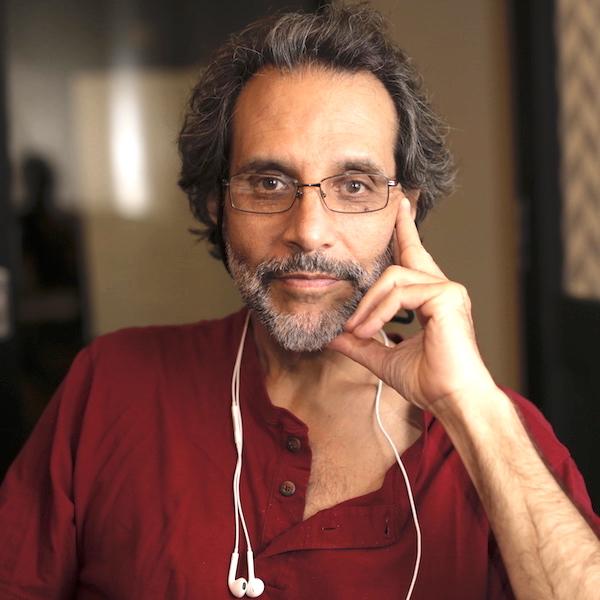
Sam Sam D'Amico, a professional photographer and photography instructor, helps anyone who wants to be a better photographer. He'll work with his students to increase their understanding of camera operation, composition, light, and lighting. Sam started working as a professional photographer in the mid-1980s. Most notably, from 1992 to 1997, while working as a freelance photographer, he photographed over 500 assignments for the New York Times. Additionally, Sam received awards for his work while exhibiting his photographs in shows. Sam began
teaching photography professionally in 1998 through the Highland Park, N.J. recreation department. In 2002 Sam moved to Washington, D.C., and began teaching at the accredited
Washington School of Photography in Bethesda, Md. It was in 2003 that Sam developed his curriculum and started teaching classes in Washington, D.C. In 2018 and 2022, the Sam D'Amico Photography Classes were voted the "Best of DC" art class by the readers of the Washington City Paper. Many photography teachers spend a lot of time teaching about DSLRs and rules of composition that create homogenized, rigid photographs. On the other hand, Sam teaches about camera operation, thought process, and the individual photographer's visual communication intent. This approach to teaching allows his students to use ANY camera (yes, even the camera on their phone) and break free of the rules of composition. Approaching the creative process this way allows for fluid and spontaneous photographs unique to the photographer creating them. Sam encourages his students to find their ways as photographers. He instills the skills in his
students that result in creative, engaging, and unique compositions that reflect the photographer's intended one-of-a-kind visual expression.
|
|
|