Lenses matter.
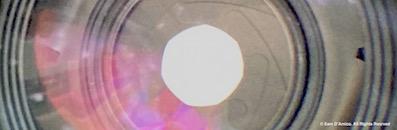
The focal length controls our angle of view, and the aperture provides a component of exposure and depth of field control, and lens perspective (perceived distance and size of the objects in our picture).
Whether we're photographing landscapes, cityscapes, people, insects, wildlife, or whatever, the lens we use adds to our intentional creative expression.
Some lenses are specific to the job that needs to be done.
However, most of the general advice that's out there that tells us which lens should be
used for which subject stifles our creativity and unique way of relating to the stuff we photograph.
Unless I needed a different lens to get a job done, the lens I prefer using for almost all my work is a 28 mm lens.
I like using this lens because it best represents how I feel about the world I experience and see as a photographer, and by doing that, I help communicate my unique visual voice. (If ya wanna call our unique visual voice our style, go ahead. I'm
just not comfortable with the word "style")
Here's a quick overview of lenses:
This is the usual stuff people will say about lens choice related to the subject matter.
I think of these as generalities, and the last thing we want is to get stuck in visual generalizations if we aspire to create unique work.
My comments are in parentheses.
- Portrait Photography: A 50mm or 85mm prime lens is ideal for portraits, offering a natural perspective and beautiful background blur. (A generalization. I've used a variety of focal lengths ranging from 28mm to 300 mm to make portraits.)
- Landscape Photography: Wide-angle lenses, such as a 16-35mm, capture the landscape's vastness, allowing us to include more of the scene. (See my portrait photography comments.)
- Wildlife Photography: For
capturing distant subjects, a telephoto lens like a 200-400mm is your best bet. It brings the subject closer without disturbing them. We can also use lenses like this for sports photography as long as the aperture allows us to use shutter speeds that are fast enough ( I'm on board with this. The last thing I wanna do is piss off a grizzly bear or moose because I've gotten too close. I photographed a bison resting in a wallow with a 28mm lens. According to the park ranger who read me the riot act
for standing so close to the bison, I'm lucky to be here. Lesson learned.)
- Macro Photography: A dedicated macro lens, typically around 100mm, lets you explore the tiny details of your subjects, from flowers to insects. ( Agreed. A good, dedicated macro lens allows us to explore the world of small things.
However, I used a cheaper, not as good alternative with funky results; I used a set of magnifying filters with my 28mm lens.)
Each lens offers its own unique applications, so consider what you most enjoy photographing and
choose accordingly, but don't get locked into generalizations because if we do, we miss the opportunity to use a lens in an unexpected way and create some surprisingly interesting imagery.
Remember, it's not so much about the gear, but
it's more about the way that we use it.
-------
The Introduction To
Photography class starts soon.
More ways to study and practice photography with me are below.
Call me if you need help determining the best course for you.
I'll help you be a better photographer—study and practice photography with me.
Currently scheduled classes are below.
Smaller classes mean better learning, so class sizes are limited to 5 participants plus me.
But smaller classes also mean spots fill up quicker, so sign up soon.
And what if the timing doesn't work for you in any of my scheduled group
classes? Private in-person lessons suited to your schedule are always an option.
And remember,
we learn and improve by doing, so practice making at least one picture daily.